3D Rubik’s Cube Vector Design: A Powerful Tool for Creative and Professional Workflows
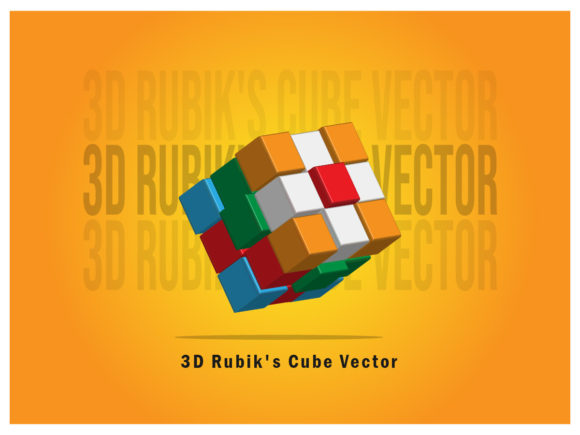
3D Rubik’s Cube Vector Design is a digital representation of the iconic puzzle that combines geometric precision with visual appeal. This design approach allows creators, developers, and professionals to integrate the Rubik’s Cube into various projects, from marketing materials to interactive applications. Understanding how to use 3D Rubik’s Cube Vector Design effectively can enhance workflow efficiency, improve visual communication, and support creative execution across multiple industries.
Understanding 3D Rubik’s Cube Vector Design
A 3D Rubik’s Cube Vector Design refers to a scalable, resolution-independent graphic that maintains clarity at any size. Unlike raster images, which lose quality when resized, vector graphics use mathematical formulas to define shapes, lines, and curves. This makes them ideal for logos, icons, illustrations, and other assets that require flexibility and precision.
The Rubik’s Cube itself is a complex 3D object with six faces, each divided into nine smaller squares. In a vector format, each face and piece is defined as a separate element, allowing for detailed manipulation. This level of control is essential for designers who need to adjust colors, orientations, or animations without compromising image quality.
Where 3D Rubik’s Cube Vector Design Fits in a Workflow
3D Rubik’s Cube Vector Design can be used at various stages of a project, depending on the goals and requirements. Whether you’re planning a marketing campaign, developing an app, or creating educational content, this design offers practical benefits that align with different workflows.
Before a Project: When starting a new initiative, 3D Rubik’s Cube Vector Design can serve as a conceptual tool. For example, a product designer might use it to visualize how a puzzle-based game could look in a digital environment. Marketers can incorporate it into mood boards or storyboards to communicate ideas effectively.
During a Project: During development, 3D Rubik’s Cube Vector Design can act as a reference or asset. In UI/UX design, it might appear as an interactive element or a background graphic. Developers working on mobile games or simulations can use the vector design to ensure consistency across platforms and screen sizes.
After a Project: Even after a project is complete, 3D Rubik’s Cube Vector Design remains useful for updates, rebranding, or repurposing content. Its scalability means it can be adapted for social media posts, print materials, or new digital formats without requiring a complete redesign.
Integration with Other Tools and Resources
3D Rubik’s Cube Vector Design works well with a variety of software and platforms. Designers often use tools like Adobe Illustrator, Inkscape, or Figma to create and edit vector graphics. These programs allow for seamless integration with other design elements, such as typography, color schemes, and layout structures.
For developers, 3D Rubik’s Cube Vector Design can be exported in formats like SVG (Scalable Vector Graphics) or EPS (Encapsulated PostScript), making it compatible with web and mobile applications. It can also be animated using CSS, JavaScript, or motion graphics tools, adding dynamic elements to user interfaces or presentations.
Collaboration is another key aspect of integrating 3D Rubik’s Cube Vector Design. Teams working on branding, content creation, or product development can share and modify vector files easily, ensuring consistency across all deliverables. This is especially important for businesses that maintain a strong visual identity across multiple channels.
Practical Implementation Tips
To get the most out of 3D Rubik’s Cube Vector Design, consider the following tips:
- Plan Ahead: Before creating or sourcing a 3D Rubik’s Cube Vector Design, define its purpose. Will it be used for a logo, a game mechanic, or a presentation? Knowing the context helps ensure the design meets specific needs.
- Choose the Right Format: Depending on your platform, select the appropriate file type. SVG is ideal for web use, while EPS is better for print or professional design software.
- Optimize for Usability: Ensure the design is clean, legible, and adaptable. Avoid overcomplicating the structure unless necessary for the intended use.
- Test Across Devices: If the design will be used digitally, test it on different screens and resolutions to confirm it retains quality and functionality.
- Document Changes: Keep track of modifications and versions, especially if multiple team members are involved. This helps prevent confusion and ensures consistency over time.
Workflow Examples and Use Cases
Here are a few real-world scenarios where 3D Rubik’s Cube Vector Design proves valuable:
- Marketing Campaigns: A company launching a puzzle-themed product might use 3D Rubik’s Cube Vector Design in social media graphics, email newsletters, and website banners. The design adds visual interest and reinforces brand messaging.
- Educational Content: Teachers or educators creating materials about problem-solving, geometry, or spatial reasoning can incorporate 3D Rubik’s Cube Vector Design into slides, infographics, or interactive lessons. It helps illustrate complex concepts in a tangible way.
- Game Development: Game designers may use the vector design as a base for a 3D puzzle game. It can be modified, animated, or integrated into larger environments, providing a foundation for gameplay mechanics and visual style.
- Branding and Identity: Brands looking to emphasize creativity, logic, or innovation might use 3D Rubik’s Cube Vector Design as part of their logo or visual identity. It conveys a sense of intellectual engagement and playfulness.
Factors to Consider for Long-Term Use
When incorporating 3D Rubik’s Cube Vector Design into long-term projects or routines, several factors should be considered:
- Preparation: Invest time in researching or creating high-quality designs that meet current and future needs. This reduces the likelihood of needing frequent replacements or revisions.
- Compatibility: Ensure the design works with existing tools, platforms, and workflows. This avoids unnecessary adjustments or workarounds.
- Usability: Focus on ease of use and adaptability. A design that is difficult to modify or integrate may hinder productivity rather than enhance it.
- Organization: Maintain a clear system for storing and accessing vector files. This improves efficiency and prevents duplication or loss of assets.
- Quality Control: Regularly review and update the design as needed. This ensures it remains relevant, functional, and aligned with evolving standards or requirements.
Conclusion: Embracing 3D Rubik’s Cube Vector Design in Your Process
3D Rubik’s Cube Vector Design is more than just a visual element—it’s a versatile tool that supports planning, execution, and implementation across diverse workflows. By understanding its role, integrating it effectively, and applying practical strategies, professionals and creators can enhance their projects and achieve better results.
Whether you're designing for business, education, entertainment, or personal use, 3D Rubik’s Cube Vector Design offers a flexible and powerful way to express ideas, solve problems, and engage audiences. With careful consideration and thoughtful application, it can become a valuable addition to your creative or professional toolkit.