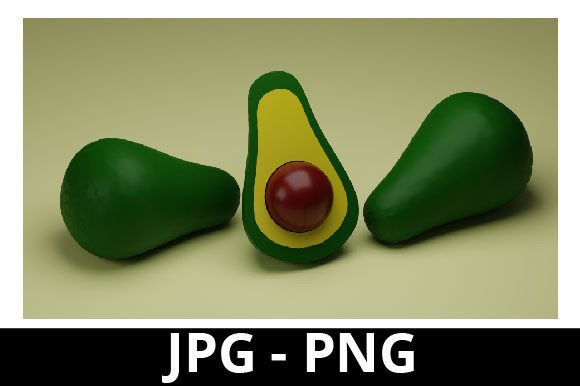
3D Rendered Avocado for Design Project
3D rendered avocado is more than just a visual curiosity—it's a powerful tool for designers, marketers, and creators looking to add unique, eye-catching elements to their projects. Whether you're working on packaging, digital illustrations, or social media content, the 3D rendered avocado offers versatility, creativity, and a modern aesthetic that resonates with diverse audiences.
This detailed digital representation of an avocado allows for precise control over lighting, texture, and perspective, making it ideal for a wide range of design applications. Its natural form, combined with the precision of 3D rendering, creates a bridge between realism and artistic expression, offering endless possibilities for innovation.
Why 3D Rendered Avocado Stands Out
Unlike traditional 2D illustrations, 3D rendered avocado provides depth, dimension, and a sense of realism that can elevate any design. It’s not just about making something look good—it’s about creating a visual experience that engages viewers and conveys a message effectively.
The appeal of 3D rendered avocado lies in its adaptability. It can be used in product design, branding, advertising, or even educational materials. Its organic shape and vibrant green color make it instantly recognizable, while the rendering process allows for customization to match different styles and themes.
For designers, this means the ability to experiment with lighting effects, surface textures, and camera angles to achieve the desired visual impact. For marketers, it offers a fresh and memorable way to present products or services, especially in industries like food, wellness, and lifestyle.
Creative Possibilities and Applications
The 3D rendered avocado can be integrated into various creative projects. For example, in packaging design, it can serve as a central visual element that highlights the freshness and quality of a product. In digital marketing, it can be used as a mascot or icon to build brand identity and recognition.
Consider using 3D rendered avocado in social media campaigns. A single, high-quality render can be animated, rotated, or layered with other elements to create dynamic content that captures attention. This approach works well for platforms like Instagram, TikTok, or YouTube, where visual storytelling is key.
Another application is in educational or informational content. For instance, a nutrition blog could use 3D rendered avocado to illustrate the benefits of avocados in a visually engaging way. Similarly, a cooking show might use it to demonstrate how to prepare dishes, adding a professional touch to the visuals.
Adapting 3D Rendered Avocado for Different Goals
Designers and creators can tailor 3D rendered avocado to suit specific goals. If the goal is to create a bold, modern look, the avocado can be stylized with sharp edges, metallic finishes, or neon accents. For a more organic feel, the render can emphasize natural textures, subtle shadows, and realistic lighting.
When targeting different audiences, the style of the 3D rendered avocado should reflect the preferences of the intended viewers. A younger audience might respond well to colorful, playful interpretations, while a professional or corporate audience may prefer clean, minimalist designs.
Additionally, the format and platform matter. A 3D render optimized for web use might require lower resolution and file size, while a print project would need higher quality and precise color matching. Understanding these nuances ensures that the final output meets the needs of the project and the audience.
Practical Tips for Using 3D Rendered Avocado
To get the most out of 3D rendered avocado, start by defining the purpose of your project. Are you aiming for realism, abstraction, or something in between? This will guide your choices in terms of software, lighting, and texture settings.
Use high-quality modeling tools like Blender, Maya, or Cinema 4D to create accurate and detailed avocado models. Pay attention to surface details such as bumps, ridges, and the smoothness of the skin. These small elements can significantly enhance the realism of the render.
Experiment with lighting to highlight the avocado’s features. Soft, diffused lighting can create a gentle, inviting mood, while directional light can add drama and depth. Don’t hesitate to try different angles and perspectives to find the most compelling composition.
Finally, ensure consistency across your design work. If you’re using 3D rendered avocado in multiple projects, maintain a cohesive style and color palette. This helps reinforce brand identity and improves the overall visual harmony of your work.
Real-World Examples and Inspiration
Many brands have successfully incorporated 3D rendered avocado into their visual strategies. For example, a health-focused app might use a 3D avocado as a symbol of wellness, appearing in app icons, promotional banners, and user interfaces. A food delivery service could feature a rotating 3D avocado in their ads to showcase the freshness of their ingredients.
Artists and illustrators also use 3D rendered avocado to add a unique flair to their portfolios. By combining it with other elements like typography, backgrounds, or animations, they create visually striking compositions that stand out in competitive markets.
Even in non-traditional contexts, such as interactive installations or augmented reality experiences, 3D rendered avocado can be a focal point. Its familiar yet intriguing form invites exploration and engagement, making it a versatile asset for creative projects.
Conclusion: Embrace the Potential of 3D Rendered Avocado
3D rendered avocado is more than a design trend—it’s a practical and creative resource that can enhance a wide range of projects. Whether you're looking to innovate in product design, digital marketing, or artistic expression, this tool offers a blend of realism, flexibility, and visual appeal that can elevate your work.
By understanding its applications, adapting it to your goals, and experimenting with different styles, you can unlock new possibilities for your design projects. The key is to approach it with curiosity, purpose, and a focus on delivering value to your audience.