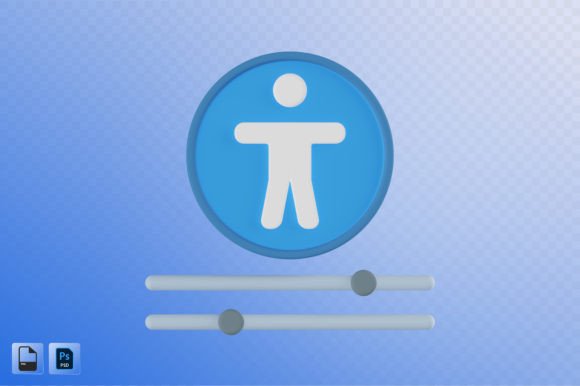
Accessibility 3D Illustration
Accessibility 3D illustration is a powerful tool that combines visual creativity with inclusive design principles. It allows creators to craft engaging, three-dimensional visuals that are accessible to all users, including those with disabilities. By focusing on clarity, contrast, and usability, these illustrations can enhance user experience across various platforms and formats.
This approach is particularly valuable in digital environments where accessibility is essential for reaching a broad audience. Whether you're a designer, marketer, or educator, understanding how to create effective 3D illustrations that prioritize accessibility can open up new opportunities for communication and engagement.
At its core, accessibility in 3D illustration involves thoughtful design choices that ensure content is perceivable, operable, understandable, and robust for all users. This includes considerations such as color contrast, text alternatives, and interactive elements that work seamlessly with assistive technologies.
What Makes Accessibility 3D Illustration Unique
Unlike traditional 3D graphics, accessibility-focused illustrations require an extra layer of consideration. They must not only look good but also function well for users with varying abilities. This means designing with features like high-contrast colors, scalable elements, and clear visual hierarchy.
One of the most compelling aspects of accessibility 3D illustration is its ability to convey complex information in an intuitive way. For example, a 3D diagram explaining a medical process can be made more accessible by adding labels, audio descriptions, and interactive elements that allow users to explore different parts of the illustration at their own pace.
Additionally, these illustrations can be adapted for different mediums, from websites and apps to printed materials and virtual reality experiences. This flexibility makes them a versatile choice for creators looking to reach diverse audiences.
Creative Possibilities and Applications
The creative potential of accessibility 3D illustration is vast. From educational content to marketing campaigns, there are countless ways to apply this approach. For instance, a designer might use 3D illustrations to create an interactive tutorial that guides users through a software interface, making it easier for people with visual impairments to navigate the tool.
Another application could involve using 3D models in e-learning platforms to help students grasp abstract concepts. By incorporating accessibility features like alt text, screen reader compatibility, and adjustable zoom, these illustrations can support a wider range of learners.
For marketers, accessibility 3D illustration offers a way to create visually striking campaigns that are also inclusive. A product demonstration video, for example, can be enhanced with 3D animations that are accompanied by descriptive audio and captions, ensuring that all viewers can engage with the content.
Adapting for Different Goals and Audiences
One of the strengths of accessibility 3D illustration is its adaptability. Creators can tailor their designs to meet specific goals, whether it's improving user engagement, simplifying complex data, or enhancing brand visibility. The key is to understand the needs of the target audience and adjust the design accordingly.
For example, a nonprofit organization focused on disability rights might use 3D illustrations to explain policies and services in a way that is easy to understand for people with cognitive or sensory differences. In contrast, a tech startup might use similar techniques to showcase the features of a new app, making it more appealing to a broader demographic.
When adapting 3D illustrations for different contexts, it's important to maintain consistency in style and messaging. This helps build trust and ensures that the visual identity remains strong across various platforms and formats.
Practical Tips for Effective Design
To create effective accessibility 3D illustrations, start by defining your goals and audience. Ask yourself: Who will be using this content? What do they need to understand? How can I make this as clear and useful as possible?
Next, focus on the fundamentals of accessible design. Use high-contrast color schemes, avoid relying solely on color to convey meaning, and ensure that all interactive elements are keyboard-friendly. These steps can significantly improve the usability of your illustrations.
Testing is also crucial. Invite users with different abilities to review your work and provide feedback. This can reveal potential issues that may not be obvious during the design process. Incorporating this feedback will help you refine your illustrations and make them more inclusive.
Realistic Examples and Inspiration
Looking at real-world examples can provide valuable insight into how accessibility 3D illustration is being used today. For instance, some educational platforms use 3D models to teach science concepts, adding audio descriptions and interactive elements to make learning more accessible.
In the healthcare sector, 3D illustrations are often used to explain medical procedures and treatments. By incorporating accessibility features, these visuals can help patients better understand their conditions and treatment options, leading to more informed decision-making.
For businesses, accessibility 3D illustration can be a powerful tool for storytelling. A company might use 3D animations to showcase its values, products, or services in a way that resonates with a wide audience while maintaining a commitment to inclusivity.
Conclusion and Next Steps
Accessibility 3D illustration is more than just a design trend—it's a practical approach that can enhance the way we communicate and connect with others. By prioritizing clarity, usability, and inclusivity, creators can produce visuals that are both beautiful and functional.
If you're interested in exploring this area further, start by experimenting with simple 3D tools and gradually incorporate accessibility features into your workflow. With practice and attention to detail, you can develop a style that not only looks great but also serves a meaningful purpose for a diverse audience.